
TV Ratings Explained: Impact, Methods, and Uses. More than 120 million U.S. households tune into TV every day, shaping what networks air and what advertisers promote. Yet most viewers never see the complex numbers that influence which shows stay or go. Understanding how TV ratings work reveals why your favorite programs appear on screen and how they capture industry attention in a crowded entertainment world.
Table of Contents
- What Are TV Ratings and How Are They Measured
- Types of TV Ratings Systems Worldwide
- The Role of TV Ratings in Entertainment Industry
- How TV Ratings Affect Programming and Advertising
- Limitations and Criticism of TV Ratings Data
Key Takeaways
| Point | Details |
|---|---|
| Importance of TV Ratings | TV ratings are crucial for understanding audience preferences, guiding decisions in programming, advertising, and content distribution. |
| Evolution of Measurement Techniques | Modern methods like Automatic Content Recognition (ACR) improve accuracy and provide real-time data across multiple platforms. |
| Global Variations | Different countries utilize unique methodologies for TV ratings, such as people meters and advanced digital tracking, to capture viewer behavior. |
| Impact on Programming and Advertising | Ratings influence content replication, timeslot optimization, and targeted ad strategies, shaping the landscape of the entertainment industry. |
What Are TV Ratings and How Are They Measured
TV ratings are a critical metric in the entertainment industry that quantify the number of viewers watching a particular television program. They provide crucial insights into audience size, demographic composition, and overall engagement with media content. According to Nielsen, these ratings help networks, advertisers, and content creators understand viewer preferences and behavior.
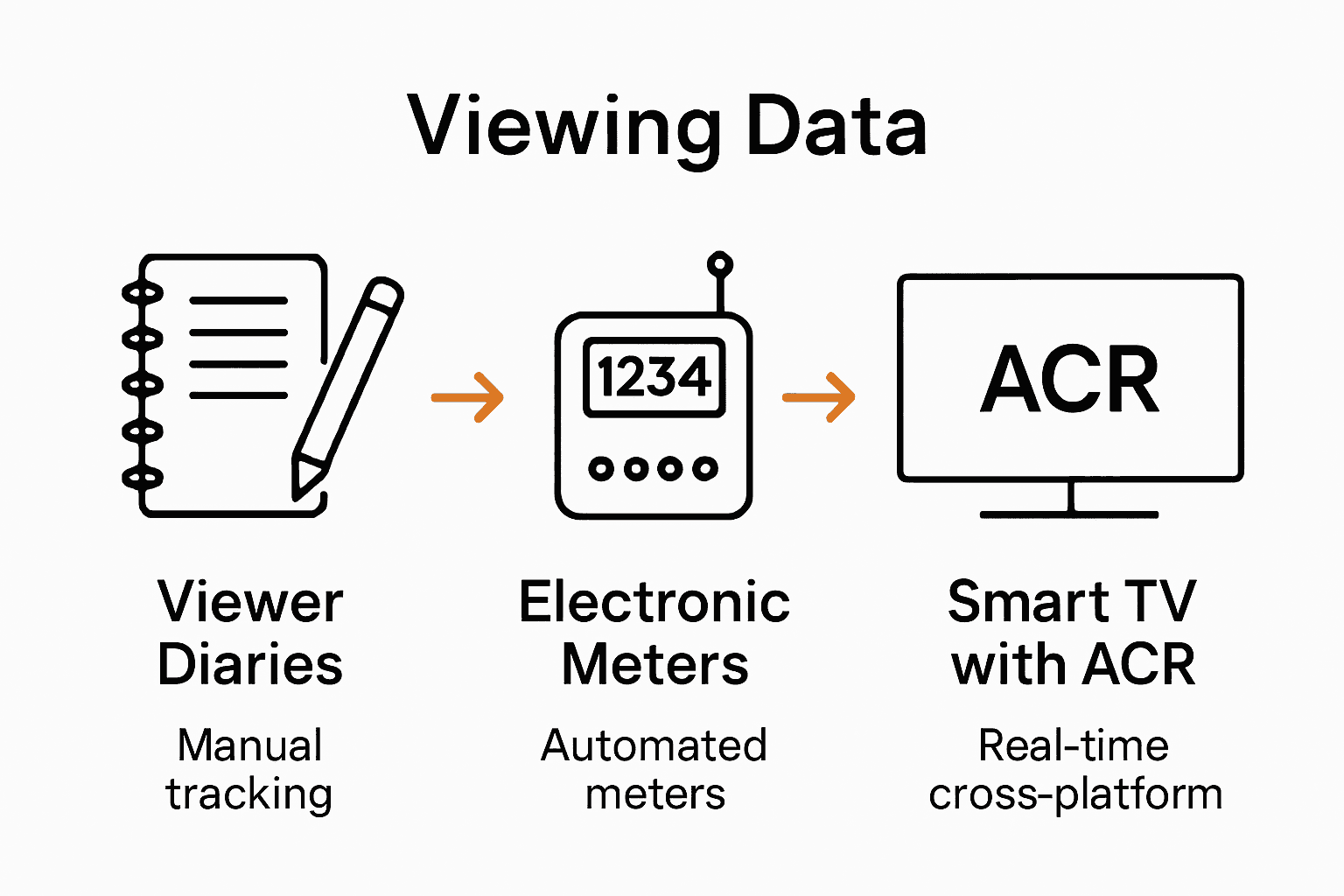
Traditionally, TV ratings were measured through two primary methods. The first involved viewer diaries, where selected households manually recorded their viewing habits. The second method used electronic meters that automatically tracked television consumption. As TVScientific explains, modern measurement techniques have significantly evolved to include advanced technologies like Automatic Content Recognition (ACR), which can directly monitor and transmit viewing data in real-time.
Here’s a comparison of traditional and modern TV ratings measurement methods:

| Method | Key Features | Main Technologies |
|---|---|---|
| Viewer Diaries | Manual entry Subjective recall | Paper logs Phone surveys |
| Electronic Meters | Automated tracking Limited detail | Set-top boxes Meters |
| Automatic Content Recognition (ACR) | Real-time data Cross-platform tracking | Smart TVs ACR software |
| Digital & Cross-Platform | Multi-device measurement Demographic insights | Streaming analytics Panels |
Key components of contemporary TV ratings measurement include:
- Panel Sampling: Selecting representative households to track viewing patterns
- Digital Tracking: Monitoring content consumption across multiple platforms
- Demographic Segmentation: Breaking down viewer data by age, gender, income, and other relevant factors
- Cross-Platform Measurement: Capturing viewership across traditional TV, streaming services, and mobile devices
Today’s TV ratings go far beyond simple viewer counts. Understanding TV Ratings: Complete Guide for Viewers demonstrates how these metrics now provide complex insights into audience engagement, helping networks make critical programming decisions and allowing advertisers to target their content more effectively.
Types of TV Ratings Systems Worldwide
TV ratings systems around the world employ diverse methodologies to track and analyze audience viewership. People meters have emerged as a primary technology for measuring television consumption globally. As Wikipedia explains, these devices record viewing habits by detecting channels watched and identifying specific viewers through individually assigned buttons, providing nuanced insights into audience behavior.
Different countries have developed unique approaches to TV ratings measurement. In India, for instance, the Broadcast Audience Research Council (BARC) has implemented an innovative system that utilizes advanced audio watermark technology. Wikipedia reveals that BARC’s methodology covers over 210 million households, with a comprehensive measurement approach based on a sample of more than 50,000 panel homes.
Key variations in global TV ratings systems include:
- Electronic Metering: Automated tracking of viewing patterns
- Panel Research: Selecting representative household samples
- Digital Tracking: Monitoring content consumption across multiple platforms
- Demographic Segmentation: Analyzing viewer data by age, gender, and other characteristics
To understand the evolution of these measurement techniques, TV Ratings for Networks Now and Then provides a comprehensive look at how television audience measurement has transformed over the decades, highlighting the increasing complexity and precision of modern rating systems.
The Role of TV Ratings in Entertainment Industry
TV ratings serve as a critical lifeline for the entertainment industry, providing invaluable insights that drive strategic decision-making across multiple sectors. According to Nielsen, these ratings are essential for guiding decisions in programming, advertising, and content distribution, helping media professionals optimize their investments and assess the true value of their content inventory.
The impact of TV ratings extends far beyond simple viewership numbers. TVScientific explains that these metrics inform strategic choices by revealing intricate details about viewer preferences and behaviors. This data becomes a powerful tool for content creators, network executives, and advertisers who rely on precise audience insights to develop targeted programming and marketing strategies.
Key roles of TV ratings in the entertainment industry include:
- Content Development: Identifying audience preferences and trends
- Advertising Strategy: Determining optimal ad placement and pricing
- Programming Decisions: Scheduling shows based on viewer engagement
- Revenue Generation: Helping networks and platforms monetize content effectively
To dive deeper into how television viewership translates into financial success, How TV Shows Make Money offers a comprehensive exploration of the complex ecosystem where ratings directly impact a show’s economic potential and long-term sustainability.
How TV Ratings Affect Programming and Advertising
TV ratings fundamentally reshape the landscape of television programming and advertising strategies. According to Nielsen, these metrics directly influence network decisions by identifying popular content types, which ultimately leads networks to schedule similar shows that are most likely to attract and retain viewers.
TVScientific explains that ratings serve as a critical compass for both programming executives and advertisers. Networks carefully analyze viewer preferences to adjust content, ensuring they maintain and potentially grow their audience base. For advertisers, ratings become a strategic tool to allocate budgets effectively, targeting programs that reach specific demographic groups with precision.
The intricate relationship between ratings, programming, and advertising manifests through several key mechanisms:
- Content Replication: Reproducing successful show formats
- Timeslot Optimization: Positioning shows for maximum viewer engagement
- Demographic Targeting: Matching advertising messages to specific audience segments
- Budget Allocation: Determining ad spend based on audience reach
To explore the evolving landscape of television marketing, TV Advertising in this Era provides a comprehensive look at how modern networks and advertisers leverage ratings data to create more sophisticated and targeted entertainment strategies.
Limitations and Criticism of TV Ratings Data
TV ratings data are far from perfect, with numerous methodological challenges that raise significant questions about their accuracy and representativeness. According to Wikipedia, traditional measurement techniques like people meters can inadvertently underrepresent certain demographics, particularly young children who may struggle to operate tracking devices correctly, potentially leading to substantial underestimation of their viewership.
The complexity of modern media consumption further complicates traditional rating methodologies. Some measurement approaches face inherent biases that skew data interpretation. Wikipedia highlights how metrics like the Appreciation Index can be problematic, as audiences tend to watch shows they already enjoy, which may artificially inflate scores and misrepresent broader viewer sentiment.
Key limitations in TV ratings measurement include:
- Demographic Bias: Unequal representation of different age groups
- Technology Limitations: Challenges in tracking multi-platform viewing
- Sample Size Restrictions: Potential statistical inaccuracies
- Self-Selection Bias: Viewers who participate in ratings may not represent typical audiences
For deeper insights into the nuanced world of television viewership, TV Series Viewer Competition offers a comprehensive exploration of how these measurement challenges impact our understanding of audience engagement.
Unlock the Power Behind TV Ratings and Make Smarter Viewing Choices
Understanding TV ratings is no small feat. The article reveals the complex challenges of measuring audience behavior across multiple platforms and demographics. If you ever felt overwhelmed by figuring out what shows are actually worth your time or wondered how networks decide programming and advertising strategies, you are not alone. The concepts of panel sampling, cross-platform measurement, and demographic targeting are vital but not always easy to grasp. That’s where we come in.

At Sparetimetv.com, we turn these intricate rating insights into simple, actionable guides that help you navigate the world of TV and streaming. Whether you want to keep up with the hottest trending titles, explore top-rated shows, or view accurate primetime schedules, our site gives you the edge to watch smarter today. Don’t wait to miss out on shows that networks are racing to promote based on deep rating analytics. Discover how TV ratings impact your entertainment choices and get real-time updates by visiting Sparetimetv.com. Enhance your viewing experience with every click and make your leisure time truly rewarding.
Frequently Asked Questions
What are TV ratings and why are they important?
TV ratings measure the number of viewers watching a specific television program, providing insights into audience size and preferences. They are essential for networks and advertisers to understand viewer behavior and optimize programming and advertising strategies.
How are TV ratings measured today?
Modern TV ratings are measured using various methods, including electronic meters, Automatic Content Recognition (ACR), and digital tracking for comprehensive audience insights across multiple platforms.
What are the key roles of TV ratings in the entertainment industry?
TV ratings influence content development, advertising strategies, programming decisions, and revenue generation by helping media professionals understand viewer preferences and optimize their investments.
What are some limitations of TV ratings data?
TV ratings data face methodological challenges such as demographic bias, technology limitations in tracking multi-platform viewing, sample size restrictions, and self-selection bias, which may affect the accuracy and representativeness of the information.