
Role of TV Ratings: Complete Guide for Viewers. Did you know a single episode of a hit show can draw in over 10 million viewers during prime time? Understanding TV ratings matters because these numbers decide what programs get made, who advertises during your favorite shows, and even how much networks earn. By breaking down rating systems and revealing how viewership is measured, you get a clearer picture of how your choices shape the world of television.
Table of Contents
- TV Ratings Defined And Key Concepts
- Different Types Of TV Ratings Systems
- How Ratings Are Measured And Reported
- Role Of Ratings In Content Decisions
- Impact On Networks, Advertisers, And Viewers
Key Takeaways
| Point | Details |
|---|---|
| Television Ratings Overview | TV ratings are essential for measuring viewer engagement, guiding networks, advertisers, and content creators in understanding audience behavior and preferences. |
| Rating Systems Variability | Different countries employ unique TV ratings systems, focusing on various methodologies to track viewer demographics and content appropriateness. |
| Measurement Techniques | Various methods, including people meters and digital tracking, provide nuanced insights into audience behavior, but each technique has its own strengths and limitations. |
| Impact on Content Decisions | TV ratings significantly influence programming and advertising strategies, helping stakeholders make informed choices about content and audience targeting. |
TV Ratings Defined and Key Concepts
Television ratings are sophisticated audience measurement techniques that reveal the heartbeat of viewer preferences and engagement. TV ratings provide a numeric snapshot of how many people watch a particular television program during a specific time period, typically expressed as a percentage of potential viewership. According to Understanding What is Nielsen Rating and Its Impact, these measurements are critical for networks, advertisers, and content creators to understand audience behavior.
At their core, TV ratings combine three essential elements: the rating system, rating level, and content attributes. Research indicates that rating systems vary significantly across different countries, with each developing unique methodologies to capture viewership data. These systems track multiple dimensions – from total viewers to specific demographic breakdowns like age groups, gender, and geographic location.
- Rating Percentage: Represents the proportion of potential viewers actually watching a program
- Share Percentage: Indicates the percentage of televisions in use during a specific timeslot
- Demographic Tracking: Breaks down viewership by age, gender, income levels
Modern TV ratings have evolved beyond simple viewership numbers. They now incorporate complex data analysis techniques that help networks understand not just who is watching, but why certain programs attract specific audiences. By examining these intricate patterns, television networks can make strategic programming decisions, tailoring content to meet viewer preferences and maximize engagement.
Different Types of TV Ratings Systems
TV ratings systems are complex frameworks designed to help viewers understand the content and appropriateness of television programs. According to research, these systems vary dramatically across different countries, reflecting unique cultural norms and broadcasting standards. TV Ratings for Networks Now and Then highlights how these rating methodologies have evolved over time to provide more nuanced content guidance.
In the United States, the pay television content advisory system represents a voluntary framework developed by the television industry to categorize programs based on specific content criteria. This system typically covers several key dimensions:
- Sexual Content: Ratings that indicate level of sexual themes or scenes
- Violence: Indicators of graphic or intense violent sequences
- Language: Assessments of profanity or mature dialogue
- Thematic Elements: Guidance on complex or potentially sensitive narrative themes
Globally, television content rating systems differ significantly. Some countries use age-based classifications, while others focus on detailed content descriptors. These rating systems serve multiple purposes: protecting younger viewers, helping parents make informed viewing choices, and providing transparency about program content. By understanding these diverse rating approaches, viewers can make more educated decisions about their entertainment consumption.
How Ratings Are Measured and Reported
TV ratings measurement is a sophisticated process that involves collecting and analyzing comprehensive viewership data across multiple channels and demographics. Popularity of TV Shows in the USA reveals that modern measurement techniques go far beyond simple viewer counts, incorporating complex data collection methodologies that provide nuanced insights into audience behavior.
Traditional measurement approaches typically involve several key techniques:
Here’s a comparison of common TV ratings measurement techniques:
| Measurement Technique | How It Works | Strengths | Limitations |
|---|---|---|---|
| People Meters | Electronic tracking in households | Accurate real-time data | Costly, limited sample size |
| Diary Methods | Viewers manually log viewing | Low cost, good for trends | Memory errors, less precise |
| Digital Tracking | Online platform data collection | Detailed demographics, real-time | Privacy issues, not all platforms tracked |
| Demographic Sampling | Representative population segments | Statistically robust insights | Requires careful selection, potential bias |
- People Meters: Electronic devices installed in selected households that track viewing habits
- Diary Methods: Participants manually log their television watching activities
- Digital Tracking: Online and streaming platform viewership data collection
- Demographic Sampling: Representative population groups selected to provide statistically significant insights
Internationally, different regions have developed unique measurement systems. For instance, China’s CSM Media Research created the TV Program Rating & Information System (TVPRIS), a comprehensive tool that combines background information, broadcasting details, and ratings data for television dramas. These measurement systems aim to provide broadcasters, advertisers, and content creators with accurate, actionable insights about audience engagement, helping them understand viewing patterns and preferences with unprecedented precision.

Role of Ratings in Content Decisions
Television ratings play a crucial role in guiding content decisions for both viewers and broadcasters. What is Syndicated Content? explores how ratings influence programming strategies, helping networks understand audience preferences and make informed scheduling choices. These ratings serve as a critical navigation tool for viewers, enabling them to make intelligent viewing decisions based on content suitability and quality.
Ratings systems provide multiple layers of valuable information for different stakeholders:
- For Parents: Protect children from inappropriate content
- For Networks: Understand audience demographics and preferences
- For Advertisers: Target specific viewer segments
- For Viewers: Make informed entertainment choices
Professional rating procedures are essential mechanisms that facilitate well-informed viewing decisions. They offer transparent insights into program content, helping audiences – especially families – navigate the complex landscape of modern television. By providing clear information about program characteristics, ratings empower viewers to make personalized choices that align with their entertainment preferences, cultural sensitivities, and personal viewing standards.
Impact on Networks, Advertisers, and Viewers
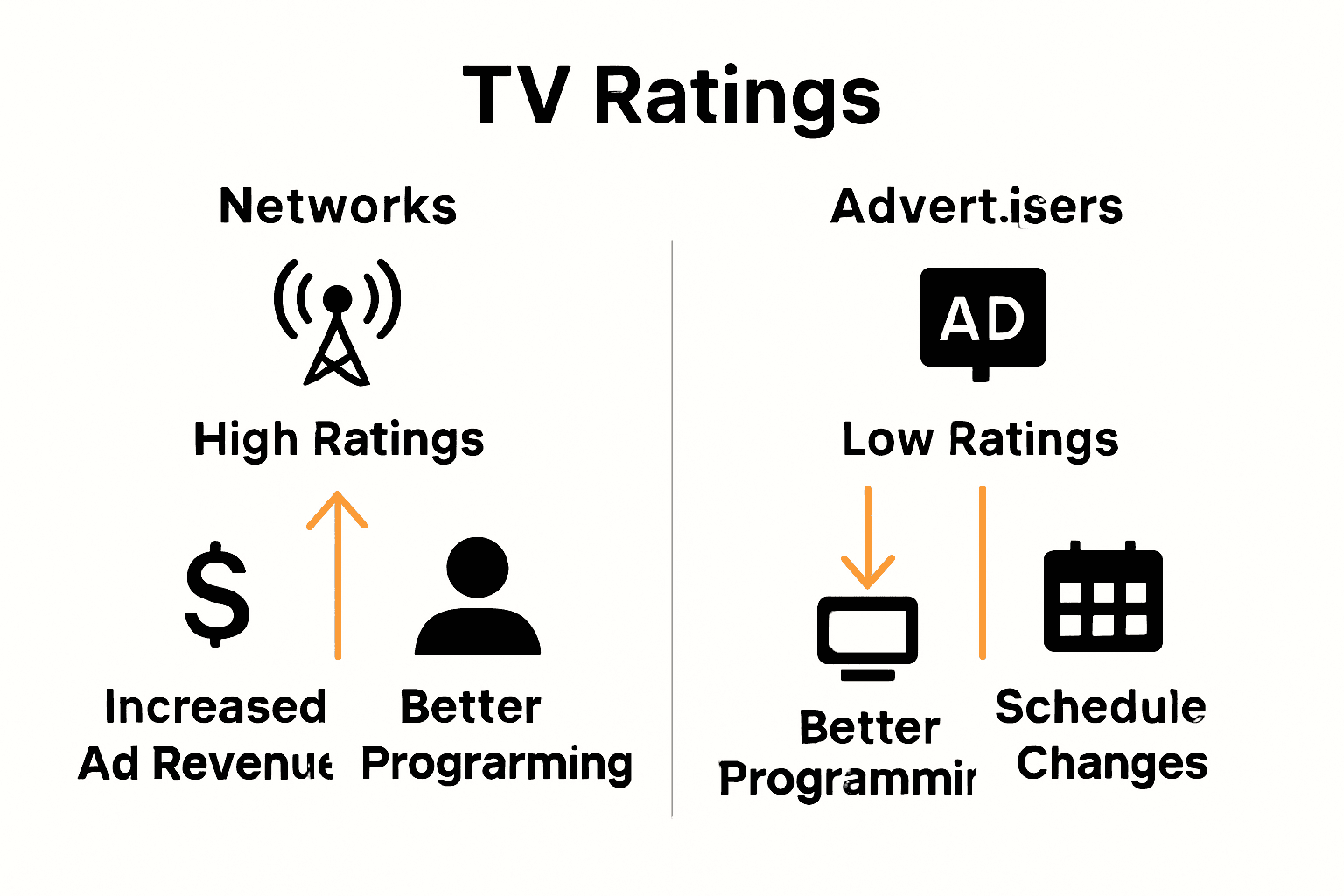
TV ratings create a complex ecosystem of influence that impacts every stakeholder in the entertainment industry. How TV Shows Make Money reveals the intricate relationship between viewer ratings, advertising revenue, and programming decisions. These ratings serve as a critical currency that determines the financial and creative strategies of television networks.
The impact varies across different participants:
- Networks: Use ratings to justify programming investments
- Advertisers: Determine advertising rates and target audiences
- Viewers: Influence content creation through watching patterns
- Content Creators: Shape future programming based on audience engagement
In the United Kingdom, Television Viewer Ratings (TVRs) have become the standard metric for measuring program and advertising popularity. This sophisticated system allows networks to compare the number of target audience viewers against the total available audience, creating a nuanced understanding of viewer preferences. By transforming raw viewership data into actionable insights, ratings enable a dynamic feedback loop that continuously refines the television landscape, ensuring that content remains engaging, relevant, and financially viable.
Take Control of Your Viewing Choices with Trusted TV Ratings
Understanding the role of TV ratings is crucial for every viewer who wants to make smart entertainment decisions. This article highlights the challenge many face today: navigating complex rating systems to protect family values while enjoying quality programming. You deserve access to clear, reliable information about content suitability, audience preferences, and program schedules all in one place.
At Sparetimetv.com, we help bridge that gap by providing comprehensive TV guides that include detailed ratings and real-time scheduling updates. Whether you want to avoid inappropriate content for kids or find the highest rated shows to watch tonight, our site offers easy-to-use tables and curated lists tailored for your needs.

Explore our up-to-date TV guides and discover the power of ratings to enhance your viewing experience. Don’t wait to make informed entertainment decisions that fit your lifestyle—visit Sparetimetv.com now and see what’s airing tonight with confidence.
Frequently Asked Questions
What are TV ratings and why are they important?
TV ratings are audience measurement techniques that provide a numeric snapshot of how many people watch a specific program. They are crucial for networks, advertisers, and content creators as they reveal viewer preferences and engagement levels, guiding programming and advertising decisions.
How do TV ratings influence programming decisions?
Television ratings guide content decisions by helping networks understand audience demographics and preferences. This information allows them to make informed scheduling choices and tailor programming to meet viewer interests, ensuring content remains relevant and engaging.
What are the different types of TV ratings systems?
TV ratings systems vary significantly across different regions, with some focusing on age-based classifications and others on detailed content descriptors. These systems help protect younger viewers and provide transparency about program content, aiding parents in making informed viewing choices.
How are TV ratings measured?
TV ratings measurement involves several techniques, including People Meters, diary methods, digital tracking, and demographic sampling. Each method has its strengths and limitations, but together they provide a comprehensive understanding of viewership patterns and audience behavior.